
Cart
0
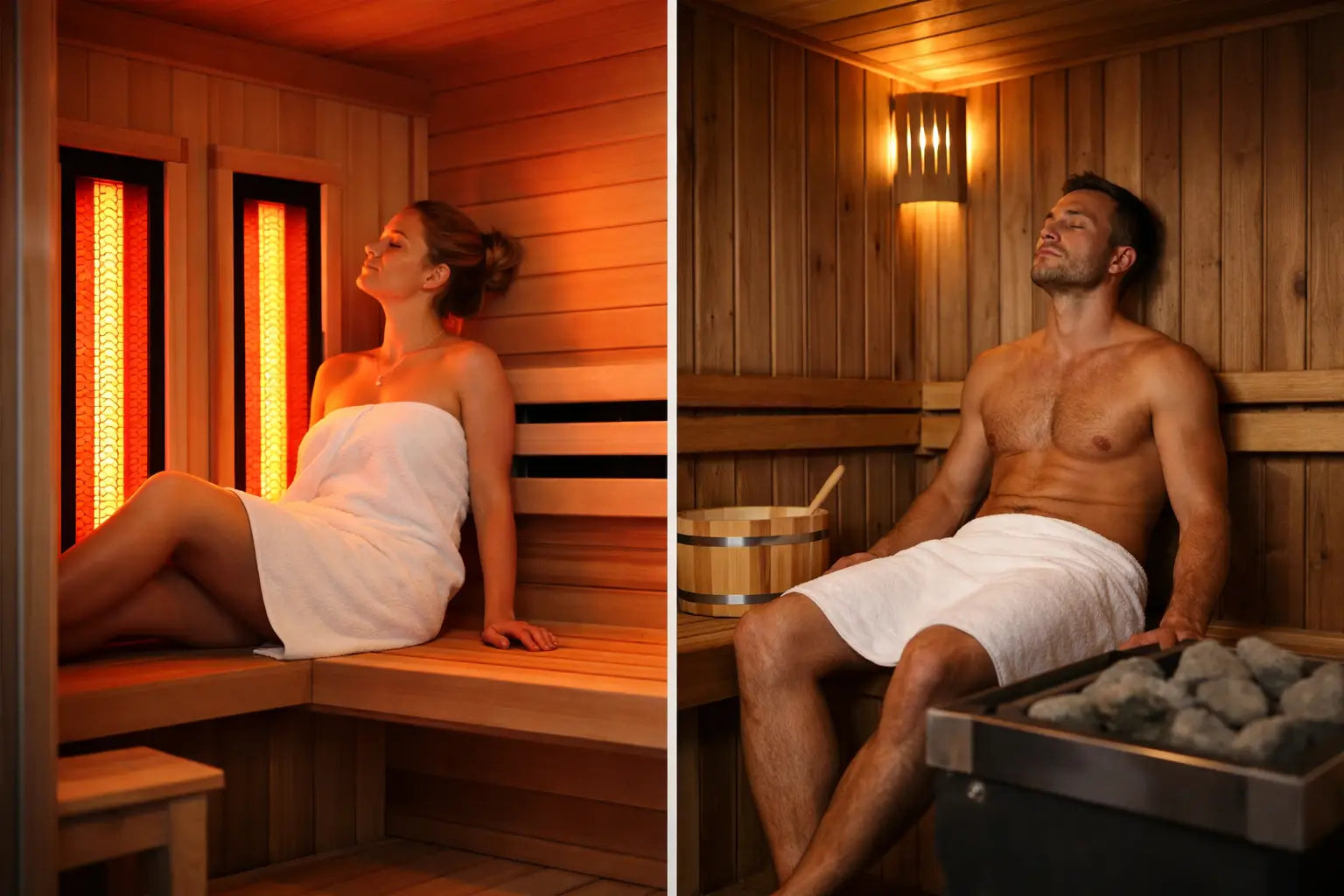
The choice between an infrared versus traditional sauna often comes down to a feeling before it comes down to a feature list. One offers a gentler, close-to-the-body warmth that can suit a quick solo reset. The other fills the room with enveloping heat, the scent of warm wood, and the timeless ritual of water meeting hot stones. Both can create a meaningful wellness practice at home. The right one is the sauna you will look forward to using, season after season.
For an outdoor retreat, the decision also shapes the experience of the space around it. A traditional sauna can become the glowing center of a cold-weather evening, especially beside a plunge pool or under an open sky. An infrared cabin may suit a smaller, more streamlined wellness corner where convenience and lower-temperature sessions are the priority.
How infrared and traditional saunas create heat
The core difference is not simply how hot the room becomes. It is how the heat reaches you.
A traditional sauna uses an electric or wood-burning heater to warm stones and the surrounding air. As the room heats up, your body warms through the hot air and radiant heat from the stove and surfaces. Adding a small amount of water to the stones creates löyly, the soft burst of steam that deepens the sensory experience and briefly changes the character of the heat.
Infrared saunas use panels that emit infrared radiation, which warms the body more directly rather than primarily heating the air. The air temperature is generally lower, but many people still experience a deep, steady warmth. Sessions can feel more approachable for those who find a high-heat traditional room intense.
Neither approach is inherently better. They simply create different rituals. If you love the atmosphere of a classic sauna bath, including the ability to adjust the humidity with water on stones, traditional heat is difficult to replace. If your ideal session is quiet, simple, and comfortably warm after a long workday, infrared may be a natural fit.
Infrared versus traditional sauna: the experience
Traditional saunas are immersive. The room itself becomes part of the ritual: cedar or thermowood walls, a sculptural heater, the warm glow of indirect lighting, and the unhurried transition between heat, cool air, and rest. Because heat rises, you can often fine-tune your comfort by moving between upper and lower benches. A wood-fired model adds the elemental pleasure of tending a fire, making it especially compelling for nature-centered properties and hospitality settings.
The heat in a traditional sauna is usually higher, often around 150 to 195°F, depending on the heater, room, and personal preference. Humidity remains relatively low until water is poured over the stones. This contrast is part of the appeal: dry heat, then a fragrant wave of steam, then a step outside into crisp air.
Infrared saunas typically operate at lower temperatures, often around 110 to 150°F. They heat up without the same degree of ambient room heat, and there is no water-on-stones moment. Some people appreciate that predictability. You can settle in with less acclimation and still leave feeling warmed and relaxed.
For couples, families, and guests, a traditional sauna often feels more communal. It invites conversation and creates a distinct destination in the landscape. Infrared can be just as restorative, but it tends to feel more individual and functional. That distinction matters when you are designing an experience rather than simply choosing an appliance.
Consider your preferred wellness ritual
Think less about what a sauna should do and more about when you imagine using it.
If you picture a Saturday morning routine with a cold plunge, a robe, and time on the deck afterward, a traditional sauna complements that slow, sensory rhythm. The heater takes time to warm, particularly in colder weather, but the preparation can become part of the pause. Wood-fired saunas ask even more of you, yet they offer a deeply satisfying return: firewood, quiet anticipation, and a heat that feels connected to the setting.
If you want to step in after a workout, before bed, or between meetings, infrared may make more sense. Many models reach a usable temperature more quickly and can be easier to operate with the press of a button. This convenience encourages consistency, which may matter more than the style of heat itself.
Both sauna types are commonly used to support relaxation and a sense of recovery. They can also provide a welcome ritual away from screens and indoor routines. Individual responses vary, though, and a sauna is not a substitute for medical care. Anyone who is pregnant or managing a heart condition, blood pressure concern, medication interaction, or other health issue should ask a qualified clinician about safe heat exposure.
Installation, utilities, and outdoor placement
A beautiful sauna should feel considered from every angle, not dropped into a backyard as an afterthought. Traditional and infrared models have different practical requirements, especially outdoors.
A traditional outdoor sauna needs a properly sized heater, appropriate electrical service or a safe wood-burning setup, ventilation, and a foundation that supports the structure. A wood-fired unit also requires clearances, a chimney system, and a thoughtful plan for firewood storage. Electric traditional saunas are often simpler to operate daily, but they may require dedicated higher-voltage wiring installed by a licensed electrician.
Infrared models generally have lower electrical demands, although requirements vary widely by size and model. Many are designed as indoor cabins, so an outdoor installation requires special attention to weather resistance, insulation, electrical protection, and manufacturer guidance. Do not assume an infrared sauna can sit exposed on a patio simply because its controls are convenient.
For either type, placement deserves care. Choose a level, well-drained surface and leave room for doors to open, people to cool down, and maintenance access. Consider the walk from the house in rain or winter darkness. A simple path, low landscape lighting, a towel hook, and a nearby seating area can make the sauna feel like a retreat rather than a distant outbuilding.
On a vacation rental or glamping property, durability and guest flow become especially important. A traditional sauna with clear controls and a protected changing area can create a memorable amenity. Infrared can be easier for guests who are unfamiliar with sauna bathing, provided the installation is built for commercial use and local requirements are addressed.
Energy use and warm-up time
Energy use is not a one-line comparison because climate, insulation, sauna size, heater type, and session habits all matter. In general, infrared saunas often use less power per session because they operate at lower ambient temperatures and may warm up faster. That can be appealing in a compact daily-use setting.
Traditional saunas usually require more energy to bring the entire room and stone mass to temperature. Once hot, however, a well-insulated sauna can hold heat effectively, particularly when its door stays closed and the room is appropriately sized for the heater. The trade-off is simple: you are heating an environment, not only warming the person inside it.
Wood-fired saunas shift the question from electrical consumption to fuel and labor. For many owners, that is not a drawback. It is part of the desired experience. For others, especially those seeking a quick weekday ritual, it may become a reason the sauna is used less often.
Design choices that shape the long-term experience
The most satisfying sauna is one that belongs to its setting. Materials, views, privacy, and the transition from heat to rest all deserve as much attention as the heater.
Traditional saunas give you more opportunity to express a classic architectural language. A barrel form can create a charming focal point in a wooded garden, while a rectilinear cabin with broad windows can feel refined beside a modern home. Natural wood interiors, layered benches, and a view toward trees or water make the ritual feel spacious even in a modest footprint.
Infrared cabins can also be beautifully designed, particularly in an enclosed studio, pool house, or covered outdoor wellness room. Their clean lines may suit a contemporary property, and their smaller scale can be useful where space is limited. Still, if your vision centers on an outdoor structure that draws people outside, traditional sauna design usually offers greater presence.
At Tanari Earth, the most compelling outdoor spaces are built around the moments between destinations: leaving the warmth of the sauna, taking a breath of cool air, slipping into a plunge, and resting somewhere quiet enough to hear the trees move. Plan for those moments early.
Which sauna is right for you?
Choose infrared if lower-temperature heat, fast sessions, simpler daily operation, and a compact footprint are high on your list. It is an appealing option for a dedicated personal practice, particularly when you want warmth without the intensity of a high-heat room.
Choose traditional if you value atmosphere, shared rituals, water on stones, and the architectural presence of a true outdoor sauna. It asks more of the site and may take longer to prepare, but it offers a fuller sensory experience that can anchor an entire outdoor oasis.
The best decision may also be shaped by your climate and property. A sheltered city patio may favor a convenient infrared cabin. A wooded home, coastal retreat, or guest property may call for the enduring appeal of a traditional sauna and a place to cool down beneath the sky.
Picture the first evening you will use it, not just the day it is installed. If the space invites you to slow down, step outside, and return to yourself, it has already become more than a sauna.

