
Cart
0
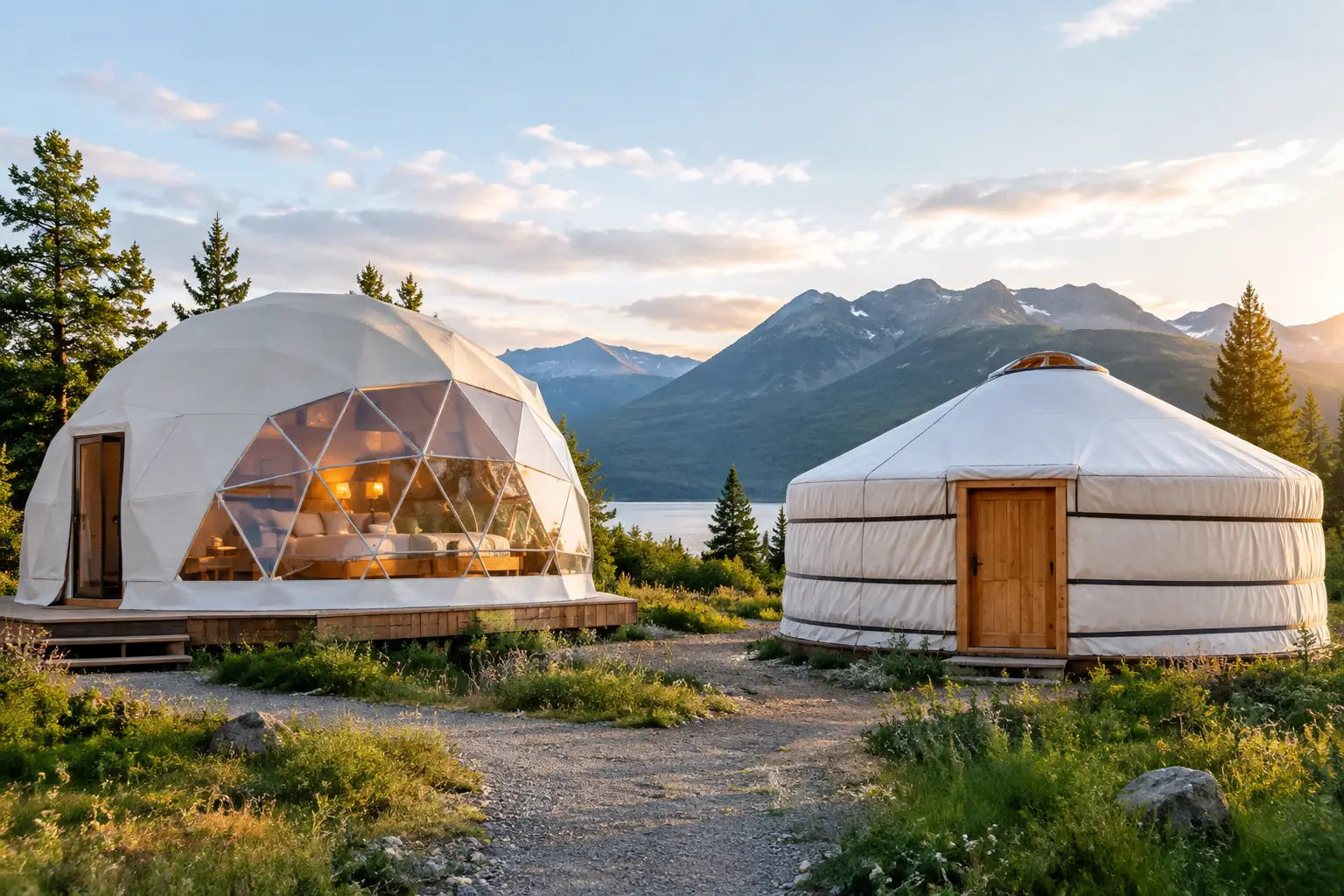
A geodesic dome versus yurt decision is rarely just about square footage. It is about the feeling you want to create when you step outside: a sculptural, light-filled escape or a warm, grounded sanctuary with a softer connection to tradition. Both can turn an underused corner of a property into a place for restoration, guests, work, or quiet ritual. The better choice comes down to your climate, intended use, design preferences, and how much hands-on care you want over time.
Geodesic Dome Versus Yurt at a Glance
A geodesic dome is a curved, triangulated structure, usually built with a steel, aluminum, or timber frame and covered in a weather-resistant exterior membrane. Its form is unmistakable. A dome feels contemporary and immersive, with generous headroom and the potential for large windows, skylights, and panoramic views.
A yurt has a circular wall system, roof rafters, and a central compression ring, traditionally finished with fabric or felt layers. Modern yurts often pair that time-honored silhouette with insulated liners, engineered flooring, clear vinyl windows, and durable exterior covers. The experience is more tactile and cocooning, often with a calmer, more organic visual presence.
Neither is automatically better. A dome tends to suit properties seeking a bold architectural moment and broad sightlines. A yurt often suits those who want a retreat that feels intimate, natural, and gently separated from everyday life.
Start With the Experience You Want to Create
For a backyard wellness room, picture the transition from the main house. A dome can feel like arriving somewhere entirely new: luminous, modern, and open to the surrounding landscape. Its curved envelope makes it especially appealing for meditation rooms, creative studios, guest lounges, and glamping accommodations where the view is part of the stay.
A yurt creates a different kind of pause. The circular interior encourages a slower pace, and its material layers can make the room feel quieter and more enveloping. It is well suited to a reading retreat, massage space, private guest suite, or a lounge beside a sauna and cold plunge. A wood stove at the center of a properly designed yurt can be particularly inviting in cooler regions.
For hospitality properties, think about the story guests will remember. A transparent or window-forward dome can make stargazing and sunrise the centerpiece. A yurt can offer a more private, grounded kind of luxury, especially when styled with natural textiles, warm lighting, and a considered outdoor deck.
Shape, Light, and Interior Layout
The primary visual difference is also a practical one. Domes have no conventional flat walls, so furniture planning takes thought. A bed, dining table, or soaking area can sit beautifully beneath the highest part of the ceiling, while lower perimeter zones become storage, seating, or display space. Custom flooring and built-ins help a dome feel polished rather than improvised.
Many domes offer impressive volume for their footprint. The curved ceiling can make a modest structure feel expansive, and window placement can frame trees, a meadow, or a favorite view. The same glass that makes a dome so memorable can also create glare and heat gain, particularly in full afternoon sun. Quality shade systems, ventilation, and site orientation matter.
Yurts have vertical sidewalls before the roof begins, which can make standard furniture placement easier. Beds, shelving, desks, and lounge seating sit naturally around the perimeter. The round layout still feels special, but it is often more forgiving when furnishing a multi-use room. If you plan to use the structure as an office or guest room, that everyday practicality deserves real weight.
Privacy Is Part of the Design
A dome with expansive glazing is ideal when your property feels secluded and the landscape is the view. If neighboring homes are close, choose window locations with care or consider a more opaque dome design. Privacy film and curtains can help, but they may diminish the open-air effect that drew you to a dome in the first place.
Yurts generally offer more inherent privacy because their exterior walls are less transparent. Windows can still bring in light and frame the outdoors without putting the entire interior on display. For a backyard therapy room, changing area, or overnight guest suite, this can be a meaningful advantage.
Climate Comfort and Four-Season Use
The climate question is where comparisons become more technical. Both structures can be used across seasons, but neither should be selected on appearance alone. Insulation, wind ratings, snow-load requirements, ventilation, heating and cooling plans, and foundation design should all match your local conditions.
A dome's aerodynamic shape can perform well in wind, and its tensioned cover sheds rain effectively when designed and installed correctly. Yet its large glazed areas can increase solar heat. In warm climates, select breathable shade, operable windows, roof vents, and cooling that is appropriately sized for the space. In snowy areas, confirm the exact model's snow-load rating rather than assuming a curved roof will handle every storm.
Yurts can be exceptionally comfortable in a range of climates when equipped with insulated walls and roof liners. Their fabric systems often require more attention to moisture management, especially in wet or humid regions. A raised platform, a well-drained site, proper ventilation, and a vapor-control strategy are essential. If you plan to heat with a stove, use a manufacturer-approved stove jack and maintain all required clearances.
For either option, a permanent foundation or engineered platform makes the retreat feel more refined and protects the investment. It also gives you a clean path for electrical service, lighting, heating, and, where appropriate, plumbing.
Setup, Permits, and Long-Term Care
A dome kit may appear simple because its frame follows a repeatable geometric pattern. In practice, assembling the structure, tensioning the cover, sealing openings, and completing the interior can require patience and experienced help. Domes are often a strong choice for owners comfortable with a more contemporary building system or working with an installer familiar with the product.
A yurt can also be assembled efficiently, but its process is distinct: platform first, then lattice walls, rafters, center ring, insulation, and exterior cover. The components are approachable, though a precise, level foundation makes all the difference. Quality varies widely across both categories, so look beyond promotional photos at frame materials, membrane specifications, hardware, warranty coverage, and replacement-part availability.
Do not treat a dome or yurt as an automatic permit-free structure. Requirements vary by city, county, use, size, utility connections, setback, occupancy, and whether the structure is seasonal or permanent. Before ordering, contact your local planning and building departments. Vacation-rental hosts should also confirm fire safety, guest occupancy, and insurance requirements.
Long-term maintenance is manageable, but it is not zero. Dome covers and yurt fabrics eventually need cleaning, inspection, and replacement. Check seams, tension points, windows, roof penetrations, and the deck or foundation at least seasonally. Keeping branches trimmed back and water moving away from the structure will protect either style.
Cost: Compare the Complete Retreat
The structure price is only one line in the budget. A thoughtfully finished retreat may also require a platform, site preparation, delivery, assembly, electrical work, lighting, heating or cooling, flooring, furnishings, landscaping, and permitting. A dome with high-performance windows and a custom interior can quickly become a premium project. A yurt may begin at a lower entry point, but all-season insulation, a high-quality platform, and elevated finishes can bring the total closer than expected.
The right budget question is not which structure costs less. It is which one delivers the experience you will use often enough to value for years. For a revenue-generating glamping stay, a dome's visual impact may support a higher nightly rate. For a private wellness garden, a yurt's warmth and ease of furnishing may make it the room you return to every morning.
Choosing the Right Structure for Your Property
Choose a geodesic dome if the landscape is a central feature, you are drawn to a modern sculptural form, and you want daylight, stars, and wide views to shape the experience. It is especially compelling for a design-forward guest suite, glamping accommodation, or creative studio where the structure itself becomes part of the destination.
Choose a yurt if you prefer a softer, more grounded retreat with practical wall space, inherent privacy, and a naturally cozy atmosphere. It can be a beautiful fit for a quiet wellness room, a backyard guest space, or a gathering place near a sauna and cold plunge.
The most lasting choice is the one that makes you want to cross the yard, leave the phone behind, and spend more time in the restorative presence of nature. Give equal attention to the view from inside, the feel of the materials underfoot, and the rituals you hope the space will hold.

